Glossary Of Chess
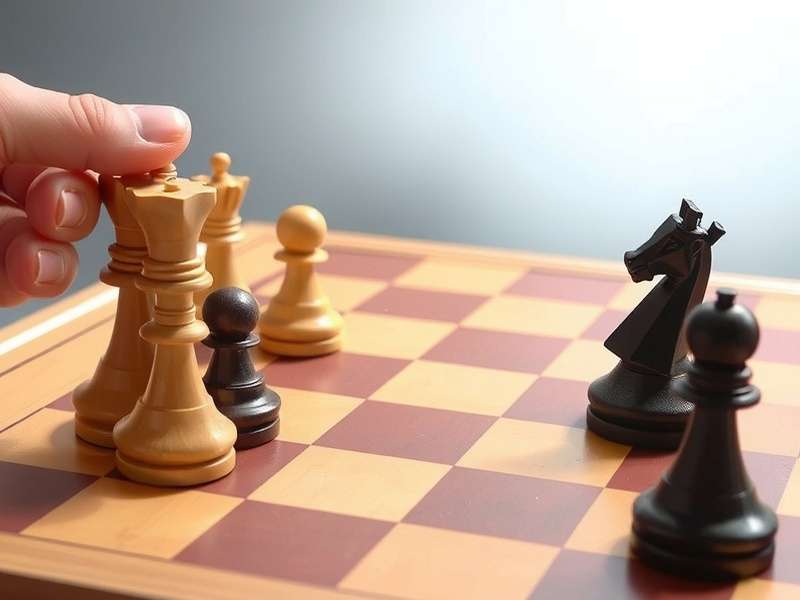
Namaste, chess lovers! 🇮🇳 Whether you're a khalifa of the board or just starting your journey, the Glossary Of Chess is your one-stop companion. This isn't just a dry list — it's a living dictionary infused with Indian chess culture, local tournament slang, and deep insights from our community. From Fianchetto to Zugzwang, every term here carries the weight of real over-the-board experience. Let's dive into the language of 64 squares — desi style! 🏆
Opening Terms
Fianchetto Italian / Indian flair
A development pattern where a bishop is placed on the long diagonal (b2/g2 or b7/g7). In Indian soil, we often call it "kone wala bishop" because of its corner-to-center power. This structure is the backbone of the King's Indian and Grünfeld defences — both massively popular in Indian club chess.
Why it matters in India
Indian Grandmasters like Viswanathan Anand and Pentala Harikrishna have used the Fianchetto to crush opponents in Online Chess Tournament events. It's a flexible setup that leads to rich middlegame battles.
King's Indian Defence KID
A hypermodern opening where Black allows White to occupy the centre with pawns, then attacks it with pieces and pawn breaks. The KID is legendary in India — it's the go-to weapon for aggressive players who love counterplay. Many state-level champions swear by it.
If you're looking for Online Chess Classes For Beginners, the KID is often the first "real" opening taught after the basic principles.
Sicilian Defence Najdorf & Dragon
The most popular response to 1.e4 at all levels. The Najdorf (1.e4 c5 2.Nf3 d6 3.d4 cxd4 4.Nxd4 Nf6 5.Nc3 a6) is a personal favourite of Anand. The Dragon variation with ...g6 is beloved by Indian club players who love sharp, tactical slugfests.
Practice the Sicilian on the Chess Online App to sharpen your tactical vision before taking it to live boards.
Queen's Gambit 1.d4 d5 2.c4
A classical opening that's experiencing a renaissance thanks to The Queen's Gambit series. In India, it's a staple of school-level chess and is taught as the "gentleman's opening." The Queen's Gambit Declined (2...e6) is a rock-solid choice for players who like positional grind.
Italian Game 1.e4 e5 2.Nf3 Nc6 3.Bc4
One of the oldest openings, and still a favourite in Indian school tournaments. The Italian leads to open, tactical positions that are perfect for learning piece activity. The Two Knights Defence (3...Nf6) often leads to the iconic Fried Liver Attack — a must-know for every aspiring attacker.
Pirc Defence 1.e4 d6 2.d4 Nf6 3.Nc3 g6
A hypermodern favourite in the Indian subcontinent, especially among players who love the King's Indian but want a different flavour. Named after Slovenian GM Vasja Pirc, it allows White to build a big centre, then Black undermines it. Requires deep understanding of timing.
Middlegame Concepts
Zugzwang German: "compulsion to move"
A position where any move a player makes worsens their position. In Indian chess parlance, we call it "phanda" — a trap where you're forced to harm yourself. Zugzwang is most common in the endgame, but middlegame Zugzwang positions are pure art. Mastering this concept separates club players from masters.
Zwischenzug "intermediate move"
An unexpected in-between move that changes the evaluation of a combination. Often a check or a threat that disrupts the opponent's plan. Indian players call it "bech mein chapa" — a surprise strike in the middle of a sequence. It's the hallmark of tactical genius.
Fork knight fork / royal fork
A single piece attacks two or more enemy pieces simultaneously. The knight is the king of forks — in India, we say "ghoda phanda" when a knight forks the king and queen. It's the most common tactical motif in Free Online Chess Against Computer games and live blitz.
Practicing forks on Chess 2 Player Same Computer with a friend is a great way to sharpen your tactics.
Pin absolute / relative
A piece is pinned when moving it would expose a more valuable piece behind it. An absolute pin is against the king (illegal to move), while a relative pin is against the queen or rook. Indian coaches drill pins into beginners as the "first weapon" of tactical play.
Skewer the "kebab" attack
Similar to a pin, but the more valuable piece is in front. When it moves, the piece behind is captured. In Indian chess slang, it's called "seekh kebab" — the front piece is the meat, the back piece is the skewer! A skewer with a bishop or rook can completely turn a game around.
Discovered Attack with check / double check
A piece moves out of the way, revealing an attack from a piece behind it. When the revealed attack is a check, it's incredibly powerful. This is a favourite trick in Online Chess Free games at the club level — many games end with a devastating discovered checkmate.
Endgame Essentials
Opposition direct / distant / diagonal
The king stands two squares away from the opponent's king, with the move player having the advantage. This is the first endgame concept every Indian player learns. In local language, it's called "sāmna" — facing off. Without opposition, you cannot convert a king-pawn endgame.
Lucena Position rool Lucena
A classic rook endgame position where the defending king is cut off, and the attacking side can build a "bridge" to escape checks and promote the pawn. Named after the 15th-century manuscript. Every Indian player aiming for 2000+ rating must know this by heart.
Philidor Position drawing fortress
The defending side places their rook on the third rank (or sixth for Black) and uses the king to block the pawn. A life-saving technique in rook endgames. In Indian chess culture, this is the "never-give-up" position — even from a losing position, you can hold a draw with perfect defence.
Pawn Promotion queening / underpromotion
When a pawn reaches the eighth rank, it becomes a queen, rook, bishop, or knight. Underpromotion to a knight for checkmate is the ultimate style move in Indian club chess. Many local tournaments have seen "underpromotion checkmate" moments that become legends.
Triangulation tempo play
A technique where the king moves in a triangle pattern to lose a tempo and force the opponent into a worse position. It's a key tool in pawn endgames. Indian coaches call it "chakkar" — circling around to gain the advantage.
Tactical Themes & Patterns
Back Rank Mate rook / queen mate on 8th rank
When the king is trapped by its own pawns on the back rank and a rook or queen delivers checkmate. In India, this is called "pichwada checkmate" — the king has no escape. Always create luft (a pawn move to give the king an escape square) to avoid this.
Smothered Mate knight checkmate
The king is surrounded by its own pieces, and a knight delivers checkmate. This is the most beautiful mate in chess, and every Indian player dreams of pulling it off. The famous Philidor's Legacy is a smothered mate pattern that every club player knows.
En Passant French: "in passing"
A special pawn capture where a pawn that has advanced two squares can be captured by an adjacent pawn as if it had moved only one square. Many beginners in Online Chess Classes For Beginners are surprised by this rule — it's a hallmark of advanced pawn play.
Castling king-side / queen-side
The only move where two pieces move at once. King-side castling (0-0) is more common in Indian amateur chess, while queen-side castling (0-0-0) is often seen in sharp Sicilian and King's Indian games. Always castle within the first 10 moves — a golden rule for beginners.
Set up your castling positions perfectly with our Chess Board Setup King guide.
Perpetual Check draw by repetition
When a player gives check indefinitely, forcing a draw. It's a lifesaver in a losing position. In Indian tournament slang, it's called "bar bar check" — the opponent can't escape the endless checks. A classic example is the queen giving checks on f6 and g6 against a king on h8.
Advanced & Indian Context Terms
Grandmaster (GM) India's GM boom
The highest title in chess (aside from World Champion). India now has 80+ Grandmasters, with Viswanathan Anand as the pioneer. The Glossary Of Chess wouldn't be complete without celebrating Gukesh, Praggnanandhaa, Vidit, and Harika — who have put India on the global chess map.
Indian Defence 1.d4 Nf6 2.c4 d6
Not a single opening, but a family of defences including the King's Indian, Grünfeld, and Old Indian. These are called "Indian" because they were pioneered by Indian masters in the 19th century. Today, they form the backbone of Indian chess culture.
Blitz & Bullet time control madness
Blitz (3-5 minutes per player) and bullet (1 minute) are wildly popular in Indian online chess. Platforms like Icc Chess have massive Indian user bases. The slang terms are "jaldi chess" (fast chess) and "bomb" for bullet. Blitz is the ultimate test of instinct and pattern recognition.
Join the action on Icc Chess to test your blitz skills against the best Indian players.
Simul simultaneous exhibition
A GM plays multiple opponents at once. In India, Anand has done simuls in Delhi, Mumbai, Chennai, and Kolkata, inspiring thousands of kids. The term is short for "simultaneous exhibition," and it's a cherished tradition in Indian chess festivals.
Rating (ELO / FIDE) the number that matters
Every serious player in India tracks their FIDE rating like a hawk. The rating floor is 1000 for beginners, and crossing 2000 is a major milestone. The Glossary Of Chess rating system is based on the Elo formula, named after Arpad Elo. In India, we say "rating badh gaya" (rating increased) with pride.
Swiss System tournament pairing
The most common pairing system in Indian chess tournaments. Players are paired against opponents with similar scores. The Online Chess Tournament scene on Indian platforms uses the Swiss system almost exclusively. It ensures every player gets to play all rounds without elimination.
Notation algebraic / descriptive
The language of chess moves. Algebraic notation (e4, Nf3, etc.) is standard worldwide, but older Indian players sometimes still use descriptive notation (P-K4, N-KB3). Learning notation is the first step in Online Chess Classes For Beginners.
Chess Culture & Community Terms
Chai & Chess the Indian ritual
In every Indian city, you'll find chai stalls where players gather for blitz games. The combination of cutting chai (half tea) and rapid chess is a cultural institution. In Mumbai's Dadar and Delhi's India Gate, these sessions run late into the night. The term "chai pe chess" is beloved across India.
Chess Wali Galli "chess lane"
In many Indian towns, there are specific lanes or parks where chess players gather. The most famous is Malleshwaram in Bangalore, where every evening sees dozens of boards set up under the trees. This grassroots culture is where many Indian GMs started their journey.
Khalifa / Ustad master / teacher
In North Indian chess slang, a khalifa is a local champion — the person who beats everyone in the neighbourhood. Ustad is a respectful term for a teacher or a highly skilled player. These terms reflect the guru-shishya tradition that still thrives in Indian chess.
Board & Clock tournament essentials
Every Indian chess player owns a tournament board (usually 2.25-inch squares) and a digital clock. The standard time control in Indian tournaments is 90 minutes + 30 seconds increment. In blitz, it's 3+2 or 5+0. Having your own equipment is a sign of dedication.
Get the perfect Chess Board Setup King for your home practice.
Open Tournament anyone can play
India hosts dozens of open tournaments every month, from Chennai Open to Delhi Open. These events attract players from all over the world. The Glossary Of Chess community loves these tournaments for the mix of competition and camaraderie.
Chess Resources & Tools
Learn with the Best Online Tools
India's chess revolution is powered by digital platforms. Whether you're practising on the Chess Online App or competing in an Online Chess Tournament, the digital ecosystem has made chess accessible to millions. For structured learning, Online Chess Classes For Beginners offer a clear path from zero to hero.
If you enjoy classic software, Microsoft Chess Titans remains a nostalgic favourite for Indian players who grew up with Windows Vista. For quick practice with a friend, Chess 2 Player Same Computer is perfect for family nights.
Test your skills against AI with Free Online Chess Against Computer or jump into casual games on Online Chess Free. For serious players, Icc Chess (Internet Chess Club) offers a premium experience with thousands of Indian members.
Master your setup with Chess Board Setup King — the definitive guide to positioning your pieces correctly every time.
Search the Glossary
Find any chess term instantly — from Alapin to Zugzwang.
Share Your Thoughts
Got a term we missed? A local slang we should know? Drop it here!