Chess Board Setup With Names: The Complete Guide
Last Updated: January 15, 2025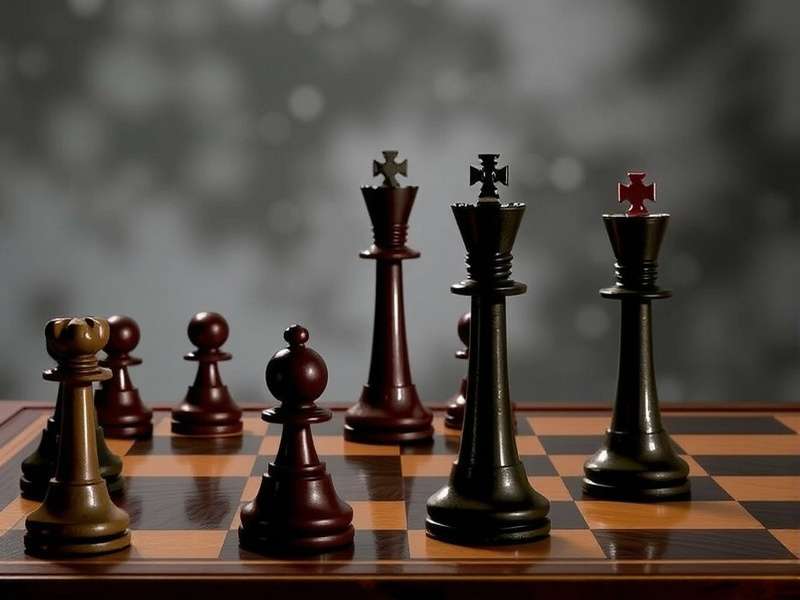
Namaste, chess lovers! 🙏 Welcome to Play Chess India – your home for everything related to the royal game of chess. Whether you are a complete beginner trying to learn the Chess Board Setup With Names or a seasoned player looking for a refresher, you have landed at the right place. In this comprehensive guide, we are going to break down the chess board setup with names in meticulous detail, using both English and Hindi terminology, so that every reader across India can grasp it with absolute clarity.
Seting up the chess board correctly is the very first step toward playing the game properly. Many beginners make elementary mistakes like placing the queen on the wrong colour or swapping the Bishop and Knight positions. This guide will eliminate any confusion once and for all. 🎯
If you are already itching to play, you can head straight to our Online Chess Game section, or dive into the fundamentals of Play Chess right here. But trust me – knowing the board setup perfectly will elevate your game no end.
Understanding the Chess Board Layout
The chessboard (called शतरंज की बिसात in Hindi) is a square board divided into 64 smaller squares arranged in an 8×8 grid. These squares alternate between light and dark colours, commonly referred to as "white" and "black" squares. The board is placed between two players such that a white (light) square is always on each player's right-hand side. This is one of the most fundamental rules of chess board setup with names.
The 8×8 Grid and Its Importance
The grid consists of 8 rows called ranks and 8 columns called files. Each square has a unique coordinate (e.g., e4, d5) that allows players to record moves in algebraic notation. In Hindi terminology, ranks are known as पंक्तियाँ and files as स्तंभ. This coordinate system is the backbone of all chess notation and is essential for intermediate players.
Board Colors and Visual Recognition
In traditional wooden boards, the squares are typically walnut brown (dark) and maple (light). In digital adaptations like those found on Free Online Chess Against Computer, you'll see high-contrast colours such as dark green and cream, which reduce eye strain during long sessions.
Why Is the Board Setup Critical?
The entire game strategy hinges on the initial positions of the pieces. A wrong setup leads to flawed openings and an imbalanced game. Understanding chess pieces names and positions is essentially understanding the grammar of the game!
Chess Pieces Names and Their Positions
Now comes the heart of the matter – the Chess Board Setup With Names. There are six types of pieces in chess. Each has a specific name (in English and Hindi), a unique symbol in notation, and a designated starting square. Let's examine them one by one.
| Piece | Hindi Name | Symbol | Quantity | Starting Position |
|---|---|---|---|---|
| King | राजा | K | 1 | e1 (White), e8 (Black) |
| Queen | रानी | Q | 1 | d1 (White), d8 (Black) |
| Rook | हाथी | R | 2 | a1, h1 (White); a8, h8 (Black) |
| Bishop | ऊँट | B | 2 | c1, f1 (White); c8, f8 (Black) |
| Knight | घोड़ा | N | 2 | b1, g1 (White); b8, g8 (Black) |
| Pawn | प्यादा | (none) | 8 | All squares on rank 2 (White) / rank 7 (Black) |
The King – राजा
The King is the most important piece in chess, though not the most powerful. You must protect your King at all costs; if it is checkmated, the game is over. In the board setup, the White King starts on e1 and the Black King on e8. The rule for the King's position is simple: the King always sits on the opposite colour to its own? No, wait – actually the White King starts on a dark square (e1 is dark) and the Black King on a light square (e8 is light). This is one of those quirky facts that many players remember incorrectly!
In Indian chess tradition, the King is referred to as राजा, and it is often depicted as a tall cross-bearing piece. Despite its royal title, its mobility is limited to one square in any direction.
The Queen – रानी
The Queen (रानी) is the most powerful piece on the board. She can move any number of squares in any straight or diagonal line. The setup rule you must never forget is: "The Queen goes on her own colour." That means the White Queen starts on d1 – a light square, and the Black Queen starts on d8 – a dark square.
This phrase – "Queen on color" – is probably the most famous mnemonic in chess board setup with names. Repeat it until it becomes second nature.
The Rook – हाथी
The Rook (हाथी) moves horizontally or vertically any number of squares. In the starting setup, two Rooks occupy the corner squares: a1 and h1 for White, a8 and h8 for Black. Rooks are powerful in the endgame and also participate in special moves like castling (which in Hindi is often called किलेबंदी or "fortification").
Rooks are also called "Elephants" in Indian terminology, which makes perfect sense given their heavy, powerful push along straight lines.
The Bishop – ऊँट
The Bishop (ऊँट) moves diagonally any number of squares. Each Bishop is colour-bound and stays on squares of a single colour for the entire game. This is a fascinating nuance that many beginners overlook. In the initial setup, the light-squared Bishop starts on c1 and the dark-squared Bishop on f1 for White (mirrored at c8 and f8 for Black).
The Hindi name ऊँट (camel) is a graceful metaphor – just as a camel moves sideways in a jolting manner, the Bishop glides along the diagonals.
The Knight – घोड़ा
The Knight (घोड़ा) moves in an L-shape – two squares in one direction and one square perpendicular. It is the only piece that can jump over other pieces. In the setup, Knights start on b1 and g1 for White, and b8 and g8 for Black.
In Indian chess, the Knight is almost always represented as a horse's head. The unconventional movement of the Knight makes it a tricky piece for beginners, but also a favourite tool of experienced players for surprising tactical blows.
The Pawn – प्यादा
Pawns (प्यादे) are the foot soldiers of the game – eight in number, lined up in the second rank for White (rank 2) and the seventh rank for Black (rank 7). Pawns move forward one square (with the option of two squares on their first move) but capture diagonally. Their starting positions are straightforward but crucial: every square from a2 to h2 for White, and a7 to h7 for Black.
Pawn structure is a deep strategic topic in its own right. Many grandmasters believe that the game is won or lost based on pawn play!
Step-by-Step Setup Process
Now that we know the pieces and their names, let's walk through the physical act of setting up the board. Follow these steps in order – it will take you less than one minute once you get used to it.
Step-by-Step Setup with Visual Cues
- Board orientation: Ensure a light square is on your right-hand side.
- Rooks first: Place your Rooks in the four corners. This anchors the process.
- Knights next: Place Knights next to the Rooks (inside them).
- Bishops next: Place Bishops next to the Knights.
- Queen on colour: Place the Queen on the remaining square of her own colour – White Queen on the light square, Black Queen on the dark square.
- King last: Place the King on the final remaining square (next to the Queen).
- Pawns row: Fill the entire second rank with Pawns.
- Double-check: Verify that all pieces are mirrored correctly against your opponent.
Common Setup Mistakes (and How to Avoid Them)
Even experienced players sometimes commit setup errors. Here's a rundown of the most common mistakes in chess board setup with names:
- Queen off colour: This is the #1 mistake. White Queen on a dark square and Black Queen on a light square? Wrong!
- Board rotated wrong: Having a dark square on the right-hand side instead of a light one.
- King and Queen swapped: Placing the King on d1 and Queen on e1.
- Bishop and Knight transposed: Putting Bishops on b1/g1 and Knights on c1/f1.
- Pawns on the wrong rank: Putting White pawns on rank 1 instead of rank 2.
If you want to practise all this in a tournament-style digital environment, try the Chess Titans Online Free version – it automatically handles setup, so you can focus entirely on your openings.
Visual Memory Aids for Setup
Indian players often learn with visual storytelling. Here's a story you can remember: "The Raja sits in his palace, with his Rani by his side. The Hathi (elephants) guard the corners, the Ghode (horses) stand by them, and the Oont (camels) nestle beside. Front and centre, the Pyade (foot soldiers) stand at attention." This story has been passed down in Indian chess circles for generations.
Chess Board Coordinates and Notation
Once you have mastered the chess board setup with names, the next logical step is understanding the coordinate system. This is where the game starts to feel truly elegant.
Files, Ranks, and Square Names
Files are the vertical columns labelled a through h (from White's left to right). Ranks are the horizontal rows numbered 1 through 8 (from White's side to Black's side). Every square is thus identified by a file letter + rank number. For example, the square e4 is central, and it is crucial in many openings.
In Hindi, files are called स्तंभ and ranks पंक्ति. Many Indian players still use the English letters, but the concept is identical.
Algebraic Notation 101
Algebraic notation is how chess moves are recorded. Each move is noted with the piece letter (except Pawns), the destination square, and special symbols for captures (×), check (+), and checkmate (#). For example, "Nf3" means the Knight moves to f3. "e4" means a Pawn moves to e4 (no letter needed).
This notation system is universally understood and is used on platforms like Chess App For 2 Players and all major chess websites.
Why Coordinates Matter for Board Setup
Coordinates ensure that the chess board setup with names is unambiguous. If you tell someone "White Queen on d1", they know exactly where it goes. This is especially vital for online play, where virtual boards are built using coordinate systems.
Advanced Setup Concepts
Now that you have the basics down, we can move on to deeper topics that separate average players from true students of the game.
Tournament Rules for Board Setup
In FIDE-sanctioned tournaments, the board must conform to strict standards:
- Light square on the right-hand side (always).
- The board must have coordinates visible on all sides for tournament play.
- Piece sizes must be proportionate to the board – the King's base should be around 70–80% of the square's width.
- Staunton-style pieces are the official standard.
Digital Boards vs Physical Boards
With the rise of platforms like Free Online Chess Against Computer, many beginners learn on digital boards first and never quite get comfortable with physical boards. Each has its merits:
- Physical boards: Better for spatial awareness, tactile learning, and playing over-the-board with friends.
- Digital boards: Automatic legal-move validation, built-in notation tracking, and online multiplayer.
For those keen to play with a friend on the same device, a Chess App For 2 Players is a fantastic option. It simulates the physical board experience while eliminating the hassle of manual setup.
The Openings That Emerge From Setup
Once the board is assembled correctly, the battle of wits begins. The initial setup dictates the three classic opening principles:
- Control the center – d4, e4, d5, e5 squares.
- Develop your minor pieces – Knights before Bishops, generally.
- Castle early – This secures your King and activates your Rook.
All of these strategies flow directly from understanding chess board setup with names and the unique capabilities of each piece.
Online Chess Resources and Best Platforms for Indians
India has embraced online chess in a huge way. Following the success of players like Viswanathan Anand and the younger generation of Grandmasters, millions of Indians now play digital chess daily. Here are some resources to accelerate your journey:
Play Chess India – Your Local Hub
Our very own platform, Play Chess is designed for Indian players, with low-latency servers and community features like regional tournaments. Whether you want to test your skills against opponents from Delhi to Chennai or get into a fast-paced blitz match, it's all accessible.
Hardcore Gaming: Chess Titans Style
If you grew up playing the classic Windows game, you'll enjoy the Chess Titans Gameplay guide that highlights how the game changes in 3D versus 2D environments. The immersive visuals of Chess Titans remain a beloved memory for many Indian millennials.
Competitive Circuit: Cash Prizes
For those looking to monetize their skills, Online Chess Tournaments With Cash Prizes are now abundant. Many Indian players have earned substantial side incomes by participating in structured online tournaments. The entry fees are often minimal, and the competition intensity is elevated.
Fun and Casual Formats
Not every game needs to be a nail-biting ranked encounter. If you're in the mood for something light-hearted and creative, check out Chess Pie – a playful variant that combines puzzle elements with standard chess rules. Perfect for warm-up sessions.
Need a quick start with fully flexed opportunities to play with friends? Dive into the world of Chess and discover new features every day.
Strategic Depth: Beyond the Basics
For advanced players who want to push into 1800+ ELO territory, Chess Sigma is an excellent analytical resource. Sigma tracks move accuracy, pinpoints tactical blunders, and provides personalised drills, ensuring that the hours you spend studying actually translate to better results over the board.
Classic Local Multiplayer: Same Device, Two Minds
Playing on one device with a friend is a cherished format in India – during long journeys or family gatherings. That's where Chess 2 Player One Device shines. You can have a full-game experience with hot-seat passes, complete with legal move enforcement and a beautiful UI.
Frequently Asked Questions (FAQ)
Why is the chess board set up with a light square on the right?
This is a standardised convention that guarantees both players have the same orientation. It ensures that the phrases "King-side" and "Queen-side" are unambiguous. Without this rule, coordination between players and tournament officials would be chaotic.
Can I set up the board differently for teaching children?
Some coaches use miniature or labeled boards for beginners, but the actual piece positions must always replicate the standard setup. Visual labels and diagrams are allowed, but the piece placement cannot be altered.
What is the quickest correct method for setting up the board?
The quickest way is to place all the major pieces on their prescribed starting squares, working from the centre outward, and then arrange the pawns. Once you've internalised the pattern, setup takes about 20 seconds.
Are chess piece names the same in Hindi as in English?
In India, the literal Hindi names (राजा, रानी, हाथी, ऊँट, घोड़ा, प्यादा) are used in regional-language contexts, but most Indian chess players seamlessly use the English terms in actual play. Both sets of names are perfectly acceptable.
Does the board setup affect who moves first?
No. The player with the White pieces moves first, independent of the physical board setup. In official games, a draw (lot) determines colours; in casual play, players often agree or let one player hide a pawn in each hand.
Search Chess Resources
Find tutorials, games, and more from our extensive archive.
Leave Your Thoughts
Have a tip about chess board setup or a question you'd like to ask? We'd love to hear from you!
Rate This Guide
How useful did you find this chess board setup guide? Your feedback helps us improve.