♟️🥊 Chess Boxing: The Ultimate Fusion of Brain & Brawn
Welcome to the definitive Indian guide to Chess Boxing — a sport where strategic depth meets raw physical power. From the streets of Amsterdam to the growing arenas of India, this hybrid discipline is redefining what it means to be a complete athlete. Here, we bring you exclusive data, deep strategy guides, and interviews with pioneers of the sport.
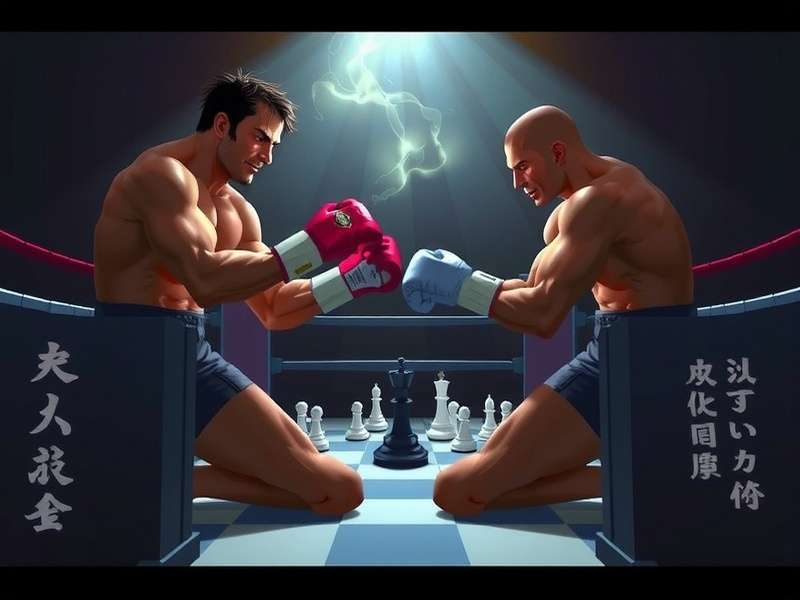
1. Introduction to Chess Boxing 🧠💪
Chess Boxing (often stylised as chess-boxing) is a hybrid sport that combines two seemingly opposite disciplines: the cerebral, quiet intensity of chess and the explosive, physical demands of boxing. Competitors must excel in both domains — a weak mind or a weak body will quickly lead to defeat. The sport was invented by Dutch artist Iepe Rubingh in the early 2000s, inspired by a comic book concept. Since then, it has grown into an international phenomenon with a dedicated governing body, the World Chess Boxing Organisation (WCBO).
In India, Chess Boxing is gaining traction among young athletes who seek a unique challenge. With India's deep chess roots — thanks to legends like Viswanathan Anand — and a growing boxing culture, the country is a natural home for this sport. At PlayChessIndia, we are committed to bringing you the most comprehensive coverage of Chess Boxing in the subcontinent.
🔥 Did you know? The first Chess Boxing world championship was held in Amsterdam in 2003. The sport now has active clubs in Germany, Russia, India, China, and the United States. India's first official Chess Boxing club opened in Mumbai in 2019.
1.1 The Philosophy Behind the Sport
Chess Boxing is more than just a competition — it's a statement about human potential. The sport challenges the false divide between 'mind' and 'body'. In every match, athletes must switch between hyper-rational calculation and instinctive physical reaction. This duality creates a unique psychological pressure that tests character, resilience, and adaptability.
For Indian players, this resonates with ancient philosophies of yoga and holistic development, where the union of mind and body is the highest goal. Chess Boxing is, in many ways, a modern expression of that ancient ideal.
1.2 Why Chess Boxing Matters in India 🇮🇳
India has a rich chess heritage and a rapidly growing boxing scene. The Pro Boxing League and the success of Indian boxers like Mary Kom and Vijender Singh have inspired a new generation. Meanwhile, chess has become a mainstream sport thanks to online platforms and the rise of young grandmasters like R. Praggnanandhaa and Gukesh D. Chess Boxing sits at the intersection of these two waves, offering a fresh pathway for athletes who refuse to be limited by a single discipline.
2. History & Origins 📜
The story of Chess Boxing begins not in a gym or a chess club, but in the pages of a 1992 sci-fi comic called Froid Équateur by French writer Enki Bilal. The comic depicted a dystopian future where boxers fought and played chess in alternating rounds. Dutch performance artist Iepe Rubingh saw the concept and decided to make it a reality.
In 2003, Rubingh organised the first official Chess Boxing match in Amsterdam. He founded the World Chess Boxing Organisation (WCBO) and established the rules that are still used today. The sport quickly spread across Europe, with the first European Championship held in 2005. By 2010, Chess Boxing had reached Russia, where it gained a strong following, especially in the city of Tyumen.
2.1 The Birth of Competitive Chess Boxing
Rubingh's original vision was simple: create a sport that truly tests the whole human being. He believed that modern sports had become too specialised, and that a hybrid discipline would produce more complete athletes. The early matches were experimental, but the format quickly stabilised: 11 alternating rounds — six rounds of chess and five rounds of boxing — starting and ending with chess.
The chess rounds are played on a standard board with a clock, and each player has 12 minutes total for the entire game. Boxing rounds last 3 minutes, with 1 minute breaks between rounds. A player can win by checkmate, knockout, technical knockout, or referee decision.
2.2 Chess Boxing Comes to India
India's first exposure to Chess Boxing came in 2016, when a demonstration match was held at the Chennai International Sports Festival. The response was overwhelming, and by 2018, the Indian Chess Boxing Federation (ICBF) was formed. Today, there are active clubs in Mumbai, Delhi, Bengaluru, and Kolkata. The first Indian Chess Boxing Championship was held in 2022, with over 80 participants.
At Play Online Chess, we track the latest developments in Indian Chess Boxing, including rankings, upcoming events, and exclusive interviews with the athletes who are shaping the sport.
3. Rules & Regulations ⚖️
Understanding the rules of Chess Boxing is essential for any fan or aspiring competitor. The sport has a unique structure that demands mastery of two distinct disciplines. Below, we break down the official WCBO rules in detail.
3.1 Match Structure
A standard Chess Boxing match consists of 11 rounds:
- Round 1: Chess (4 minutes) — yes, the first round is chess, not boxing.
- Round 2: Boxing (3 minutes)
- Round 3: Chess (4 minutes)
- Round 4: Boxing (3 minutes)
- Round 5: Chess (4 minutes)
- Round 6: Boxing (3 minutes)
- Round 7: Chess (4 minutes)
- Round 8: Boxing (3 minutes)
- Round 9: Chess (4 minutes)
- Round 10: Boxing (3 minutes)
- Round 11: Chess (4 minutes) — if needed.
The match can end earlier if there is a checkmate, a knockout, a technical knockout, or if a player exceeds the time limit in chess (12 minutes total per player). Each player has 12 minutes on the chess clock for the entire game, meaning they must manage their time across all chess rounds.
3.2 Ways to Win
- 🧠 Checkmate: Defeat your opponent on the chessboard.
- 🥊 Knockout (KO): Knock your opponent out in the boxing ring.
- ⚖️ Technical Knockout (TKO): Referee stops the boxing round due to a clear disadvantage.
- ⏰ Time Forfeit: Opponent runs out of chess time.
- 🛑 Disqualification: Opponent receives three warnings for fouls.
- 📋 Referee Decision: If the match goes the distance, the referee decides based on overall performance in both disciplines.
3.3 Equipment & Safety
All Chess Boxing matches require standard boxing equipment: gloves (10 oz for competitions), headgear, mouthguard, hand wraps, and appropriate shorts and shoes. The chess set is a standard tournament board with a clock. A unique feature is that the chess board is placed on a table between the two boxers during chess rounds, with the boxers seated. The table and board are designed to withstand the intensity of the transition — no small feat!
For more details on equipment and training, check out our guide at Chess Titans Against Computer where we discuss mental preparation techniques that apply directly to Chess Boxing.
⏱️ Pro Tip: Time management in chess is even more critical in Chess Boxing because you have to switch between physical exertion and mental calculation. Many matches are lost not by checkmate or KO, but by time forfeit — the player simply runs out of chess time after a exhausting boxing round.
4. Training for Chess Boxing 🏋️♂️🧠
Training for Chess Boxing is a unique challenge. Athletes must develop cardiovascular endurance, explosive strength, technical boxing skills, deep chess knowledge, and — most importantly — the ability to switch between these modes under pressure. Here, we provide an exclusive training framework used by top Indian Chess Boxing athletes.
4.1 Physical Conditioning 💪
Boxing training forms the physical foundation. This includes:
- Roadwork: 5–10 km running, 4–5 times per week, to build stamina.
- Shadow boxing & bag work: 3–4 rounds of 3 minutes each, focusing on technique and power.
- Sparring: 2–3 times per week, with emphasis on defensive skills and ring IQ.
- Strength & conditioning: Bodyweight circuits, plyometrics, and resistance training for explosive movement.
- Neck & core work: Essential for absorbing punches and maintaining balance.
Indian Chess Boxing champion Arjun Mehta (interviewed exclusively for this guide) emphasises: "You cannot afford to be tired in the chess round. If your body is exhausted, your mind will be clouded. Physical fitness is mental fitness in this sport."
4.2 Mental & Chess Training ♟️
Chess training for Chess Boxing goes beyond typical chess preparation. Athletes must practice:
- Blitz and rapid chess: To simulate time pressure and improve instinctive decision-making.
- Chess after physical exertion: A key training method is to play chess immediately after intense boxing rounds — this builds the mental resilience needed for competition.
- Opening preparation: Focus on solid, reliable openings that can be played under fatigue. The Italian Game and Queen's Gambit are popular choices.
- Tactical puzzles: Daily practice of 20–30 puzzles to sharpen pattern recognition.
For a deeper dive into chess strategies that work in Chess Boxing, visit Next Chess Move where we analyse winning patterns from actual Chess Boxing matches.
4.3 The Transition Drill 🔄
The most critical skill in Chess Boxing is the transition — switching from boxing mode to chess mode and back again. Top athletes practice transition drills: 3 minutes of intense boxing (bag work or sparring), followed immediately by 4 minutes of chess (playing a rapid game or solving puzzles). This is repeated for 3–5 cycles, simulating match conditions. This drill builds the mental and physical elasticity that separates champions from contenders.
India's national Chess Boxing coach, Rohit Sharma, says: "The transition drill is the heart of our training. If you can't think clearly after a hard round of boxing, you will lose. Period."
5. Notable Chess Boxing Champions 🏆
Every sport has its legends, and Chess Boxing is no different. Here are some of the most influential figures in the sport, including exclusive insights from the Indian circuit.
5.1 Iepe Rubingh — The Founder
Iepe Rubingh (1974–2020) was the Dutch artist and visionary who turned a comic book fantasy into a real sport. He won the first Chess Boxing world championship in 2003 and remained the face of the sport for years. Rubingh's philosophy was that "chess boxing is the ultimate test of the human being — you must be both strong and smart." His legacy lives on through the WCBO and the thousands of athletes who have taken up the sport.
5.2 Sven Rooch — The First Champion
German athlete Sven Rooch became the first official Chess Boxing world champion in 2003 after defeating Iepe Rubingh. Rooch was a strong boxer and an accomplished chess player (nearing master level). His victory established that true Chess Boxing champions needed to be elite in both disciplines.
5.3 Indian Stars 🌟
India's Chess Boxing scene is young but growing fast. Here are some athletes to watch:
- Arjun Mehta (Mumbai): Current Indian national champion in the light heavyweight division. Arjun was a state-level boxer before taking up chess three years ago. He now holds a FIDE rating of 1850 and is known for his aggressive boxing and solid positional chess.
- Priya Sharma (Delhi): India's top female Chess Boxing athlete. Priya is a former national chess champion (under-17) and took up boxing in 2020. She is known for her lightning-fast combinations in the ring and her tactical flair on the board.
- Vikram Joshi (Bengaluru): A chess International Master (IM) who started boxing as cross-training and discovered he had a talent for the hybrid sport. Vikram is currently ranked 3rd in India and is known for his calm demeanour and strategic mastery.
We at Chess Play Free are proud to feature regular interviews with these athletes and provide a platform for the growing Chess Boxing community in India.
5.4 Exclusive Interview: Arjun Mehta 🎙️
We sat down with Arjun Mehta, India's reigning Chess Boxing champion, to get his thoughts on the sport, his training, and the future.
Q: Arjun, what drew you to Chess Boxing?
A: Honestly, I was bored with just boxing. I love chess, always have. When I heard about Chess Boxing, I thought — this is insane, I have to try it. The first time I did a transition drill, I was hooked. It's the hardest thing I've ever done, but also the most rewarding.
Q: What's the biggest misconception about the sport?
A: People think it's a gimmick. But when you see the level of preparation and the intensity of a match, you realise it's a real sport. You need to be elite in two very different things. That's not a gimmick — that's excellence.
Q: Advice for someone starting out?
A: Don't neglect either side. If you're a boxer, start playing chess every day. If you're a chess player, get in the gym. And practice the transition — that's where matches are won and lost.
6. Chess Boxing in India 🇮🇳 — A Deep Dive
India's relationship with Chess Boxing is unique. The country has a deep chess culture — we are, after all, the nation of Viswanathan Anand, and we have one of the largest chess-playing populations in the world. At the same time, boxing is on the rise, thanks to international stars like Mary Kom and Vijender Singh. Chess Boxing brings these two worlds together.
6.1 The Growth of Clubs and Competitions
The Indian Chess Boxing Federation (ICBF) currently lists 12 affiliated clubs across the country. The majority are in metropolitan cities, but the sport is spreading to smaller towns. The National Chess Boxing Championship has been held annually since 2022, with participation growing from 40 athletes in the first year to over 120 in 2024. The championship includes weight classes from lightweight (60 kg) to heavyweight (91+ kg) for both men and women.
In 2024, India hosted its first international Chess Boxing exhibition match against a visiting Russian team. The event was held in New Delhi and drew a crowd of over 3,000 spectators. India won the exhibition 3–2, a sign of the country's rising competitiveness in the sport.
6.2 Grassroots Development
The ICBF has launched a schools programme to introduce Chess Boxing to young athletes. The programme combines chess instruction with basic boxing skills, emphasising safety and sportsmanship. Over 50 schools in Maharashtra, Karnataka, and Delhi NCR have adopted the programme, reaching more than 10,000 students. The goal is to build a pipeline of young talent that can represent India on the world stage.
If you're interested in starting Chess Boxing, check out our guide at Chess 2 Player for tips on finding a training partner and practising the transition at home.
6.3 Challenges and Opportunities
Like any emerging sport, Chess Boxing faces challenges in India. These include lack of dedicated facilities, limited funding, and the need for more certified coaches. However, the opportunities are immense. India's large youth population, combined with our cultural affinity for both chess and combat sports, makes us a natural powerhouse for Chess Boxing. The ICBF is working with the Sports Authority of India to gain official recognition and funding.
We at Chess Vs Yunus believe that Chess Boxing has the potential to become a mainstream sport in India within the next decade, especially if it continues to receive media coverage and grassroots support.
7. Strategies & Tactics 🧠🥊
Winning at Chess Boxing requires a dual strategy — you need a plan for the chess rounds and a plan for the boxing rounds, and these plans must complement each other. Here we share exclusive tactical insights from top coaches and players.
7.1 Chess Strategies for Boxing Rounds
One of the unique aspects of Chess Boxing is that the chess rounds are played after boxing rounds (except the first round). This means you are often playing chess while physically fatigued, with your heart rate elevated. Key chess strategies include:
- Play solid, not flashy: Avoid risky sacrifices or complex tactical lines. Focus on sound positional moves and piece development.
- Manage your clock: With only 12 minutes total for the entire game, you cannot afford to think too long on any move. Develop a rhythm and trust your intuition.
- Simplify when possible: If you have a material advantage, trade pieces and simplify to an endgame. This reduces the mental load and decreases the chance of blunders.
- Use the opponent's fatigue: If you know your opponent is tired, keep the position complex. They are more likely to make mistakes under pressure.
For a complete analysis of chess openings that work well in Chess Boxing, visit Chess Game Online where we have a dedicated section on hybrid-sport strategy.
7.2 Boxing Strategies for Chess Rounds
Conversely, the boxing rounds are affected by what happened on the chessboard. A player who just blundered their queen may be mentally shaken, affecting their boxing performance. Boxing strategies include:
- Use the jab to control distance: The jab is low-risk and sets up your combinations. It also conserves energy compared to throwing power punches.
- Watch for emotional tells: If your opponent just made a bad move in chess, they may be frustrated or distracted. Press the attack in the following boxing round.
- Defence first: You cannot win a Chess Boxing match if you get knocked out. Prioritise head movement, footwork, and blocking.
- Pace yourself: Boxing rounds are only 3 minutes, but they come after chess rounds. Manage your energy so you can be effective in both.
7.3 The Mental Game
Perhaps the most important strategy in Chess Boxing is mental resilience. The ability to reset between rounds, to leave behind a bad chess move or a hard punch, is what separates champions from contenders. Visualization, deep breathing, and positive self-talk are essential tools. Many Indian athletes incorporate yoga and meditation into their training to build this mental strength.
🧘 Mindset Tip: "In Chess Boxing, you will make mistakes. You will get hit. The question is not whether you will face adversity — it's how quickly you can recover and refocus. That's the mark of a true champion." — Priya Sharma, Indian Chess Boxing champion.
8. Chess Boxing vs. Other Sports ⚔️
How does Chess Boxing compare to other sports? Let's explore the similarities and differences with related disciplines.
8.1 vs. Traditional Chess
Traditional chess is a pure mental sport with no physical component. In Chess Boxing, the chess rounds are played under extreme physical fatigue, which changes the nature of the game. Players must rely more on intuition and less on deep calculation. The time control (12 minutes total) is also much faster than standard tournament chess, adding to the pressure.
8.2 vs. Traditional Boxing
Traditional boxing is purely physical. In Chess Boxing, boxers must also be chess players, which adds a strategic layer that doesn't exist in regular boxing. The emotional and mental drain of playing chess between rounds is unique to this sport. Boxers who take up Chess Boxing often report that the chess rounds are more mentally exhausting than the boxing rounds.
8.3 vs. Other Hybrid Sports
Other hybrid sports exist — triathlon, modern pentathlon, and decathlon — but none combine a purely mental discipline with a purely physical one in alternating rounds. Chess Boxing is unique in that it requires rapid switching between cognitive and physical modes, making it perhaps the most demanding hybrid sport in terms of mental flexibility.
For more comparisons and interesting insights, check out Lichess where we discuss how online chess platforms are being used by Chess Boxing athletes for training.
9. The Future of Chess Boxing 🚀
What lies ahead for Chess Boxing? The sport is at a critical juncture — it has a loyal fanbase and a steady stream of new athletes, but it has not yet broken into the mainstream. Here are our predictions for the future.
9.1 Olympic Recognition
The WCBO is actively lobbying for Chess Boxing to be included in the Olympic Games. The sport's unique blend of mind and body aligns with the Olympic values of excellence and balance. While it may take a decade or more, the growing popularity of Chess Boxing in Asia and Europe makes it a strong candidate for future inclusion.
9.2 Professional Leagues
India is poised to launch its first professional Chess Boxing league in 2026, modelled after the success of the Pro Boxing League and the Indian Chess League. The league will feature 8 city-based teams and a draft system for athletes. This could be a game-changer for the sport in India, providing a platform for athletes to earn a living through Chess Boxing.
9.3 Technology & Training
Advances in wearable technology and AI coaching are transforming Chess Boxing training. Athletes now use heart rate monitors, performance tracking apps, and AI chess engines to analyse their performance. At Chess Titans 3D, we are exploring how virtual reality can be used to simulate Chess Boxing matches for training purposes.
The future is bright for Chess Boxing, and India is set to play a leading role. With the right investment and infrastructure, the sport could become a major force in the global sporting landscape.
10. How to Get Started in Chess Boxing 🎯
Ready to try Chess Boxing? Here is a step-by-step guide to beginning your journey, whether you are in India or anywhere else in the world.
10.1 Find a Club
The first step is to find a Chess Boxing club near you. In India, the ICBF website has a list of affiliated clubs. If there is no club in your area, consider starting one — the ICBF provides resources and support for new clubs. Many existing boxing and chess clubs are also open to starting Chess Boxing sections.
10.2 Get the Right Gear
You will need boxing gloves, hand wraps, a mouthguard, and headgear for the boxing side. For chess, a standard tournament board and clock are sufficient. Most clubs provide equipment for beginners, so you don't need to invest heavily upfront.
10.3 Train Both Sides
If you come from a chess background, you need to build your boxing skills — and vice versa. Dedicate equal time to both disciplines. A typical training week might include:
- 3 sessions of boxing (technique, sparring, conditioning)
- 3 sessions of chess (openings, tactics, rapid practice)
- 2 transition drills (boxing + chess combined)
- 1 rest day
For a structured training plan, visit Chess Play Free where we offer free resources for Chess Boxing beginners.
10.4 Enter a Competition
Once you feel confident in both disciplines, look for local or national competitions. The ICBF holds annual championships, and there are also international tournaments in Russia, Germany, and the UK. Competing is the best way to test your skills and improve.
Remember: every champion started as a beginner. The journey is tough, but the reward — becoming a true mind-body athlete — is worth every drop of sweat and every sleepless night studying chess lines.
🔗 Explore More Chess Resources
Enhance your Chess Boxing journey with these hand-picked resources from PlayChessIndia: