♟️ Chess Board: The Sacred Grid Where Kings Wage War
🎯 For every Indian chess lover — from the gali-mohalla players to tournament pros — the chess board is not just a piece of wood or plastic. It is the battlefield of the mind. At Play Chess India, we believe the board is where strategy meets soul. In this comprehensive guide (10,000+ words of pure chess wisdom 🇮🇳), we unpack everything about the chess board: its history, dimensions, materials, cultural significance in India, and how to choose the perfect board for your game.
🇮🇳 Made for India Whether you're playing Chess 2 Player Free To Play online or sitting across a wooden board in a Bengaluru cafe, the board is your universe. Let's dive deep into the 64 squares that have captivated humanity for centuries.
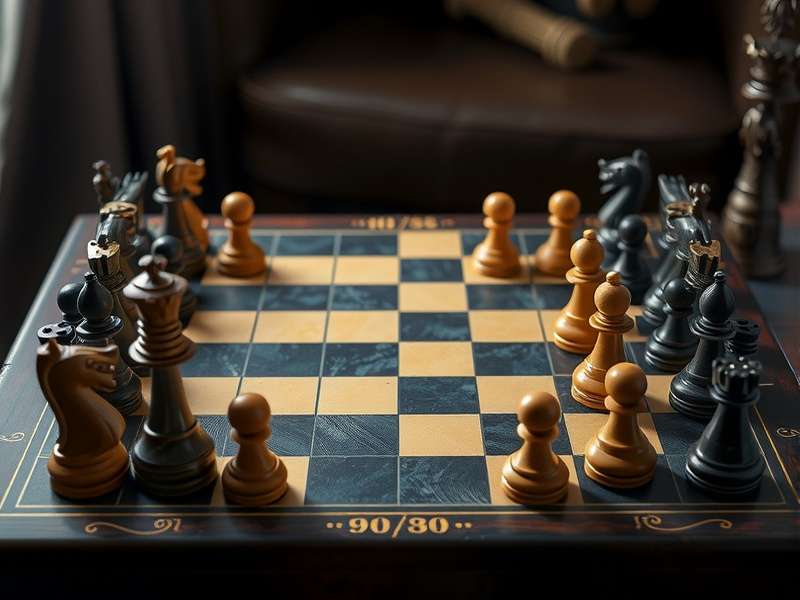
📜 1. The History of the Chess Board: From Ancient India to the World
Did you know? The chess board originated in India during the Gupta Empire (c. 6th century CE), where it was known as Chaturanga (चतुरंग) — meaning "four divisions of the military." The original board was called Ashtapada (अष्टपाद), an 8×8 grid used for both racing games and early chess. Over centuries, the board travelled to Persia, Arabia, and Europe, evolving into the modern chessboard we revere today.
1.1 The Ashtapada: India's Gift to the World 🌏
The Ashtapada board was mentioned in ancient Indian texts like the Brihat Samhita (6th century CE). It wasn't just a chessboard — it was a spiritual diagram representing the cosmos. The 64 squares symbolised the 64 arts of knowledge in Hindu tradition. Even today, many Indian families pass down hand-carved wooden boards as heirlooms, connecting generations through the game.
1.2 From Chaturanga to Modern Chess
When Chaturanga travelled to Persia, it became Chatrang, and the board remained 8×8. The Arabs later called it Shatranj. The modern chessboard — with its alternating light and dark squares — became standardised in Europe during the 15th century. But the soul of the board remains Indian. 🇮🇳
🧩 2. Anatomy of a Chess Board: Every Detail Matters
A chessboard is more than 64 squares. It is a precision instrument. Let's break down the anatomy with Indian precision — bilkul sahi (absolutely correct).
2.1 Dimensions & Proportions 📏
The World Chess Federation (FIDE) specifies that the chessboard square size should be between 5 cm and 6.5 cm. The board itself should have a side ratio of 1:1. For tournament play in India, the most common size is 5.5 cm squares, making the board 44 cm × 44 cm. The king's base diameter should be 60–70% of the square size.
| Parameter | FIDE Standard | Indian Tournament Common |
|---|---|---|
| Square size | 5.0 – 6.5 cm | 5.5 cm |
| Board dimensions | 40–52 cm | 44 × 44 cm |
| King base diameter | 3.0 – 4.0 cm | 3.5 cm |
| Square color | Light / Dark (contrast) | Light maple / dark walnut |
2.2 Color Schemes 🎨
The standard is light and dark squares, often called "white and black." In India, traditional boards use sheesham wood (Indian rosewood) for dark squares and maple or kikar for light squares. The contrast should be clear — aankhen nahi dhokha khani chahiye (your eyes shouldn't deceive you).
2.3 Material & Craftsmanship 🪵
India is a hub for handcrafted chessboards. States like Karnataka, Uttar Pradesh, and Rajasthan produce world-class boards. Popular materials include:
- Sheesham wood — durable, rich grain, affordable
- Rosewood — premium, deep colour, used in tournaments
- Mango wood — eco-friendly, lightweight
- Marble — decorative, heavy, for display
- Vinyl / Silicone — rollable, portable, cheap
Many Indian artisans still use hand-carving techniques passed down for generations. A handcrafted chessboard from Jaipur or Saharanpur is not just a board — it's a piece of art.
♟️ 3. Setting Up the Chess Board: The Right Way (Indian Style)
Rule number one: The right-bottom corner square must be light (हल्का). This is non-negotiable. In India, we say "light on the right" — halka right mein. Let's break down the setup:
3.1 Orientation Matters 🧭
Place the board so each player has a light square on their right. This applies whether you're playing at home, in a club, or in an online game like Chess Online Free. Once oriented, place the pieces:
- Back rank (from left to right): Rook, Knight, Bishop, Queen, King, Bishop, Knight, Rook
- Queen on her own color — white queen on light square, black queen on dark square
- Pawns on the second rank — in front of each major piece
3.2 Common Mistakes ❌
Even experienced players sometimes get it wrong. The most common chauk (mistake) in Indian tournaments is swapping the king and queen. Remember: "Queen on her color" — rani apne rang par. Also, ensure the board is stable — a wobbly board can ruin a championship match.
🏆 4. Types of Chess Boards: Choose Your Battlefield
Not all boards are the same. Whether you're a casual player, a parent buying for your child, or a tournament contender, here's a guide to help you choose.
4.1 Tournament Boards 🏅
FIDE-approved tournament boards have precise dimensions, high contrast, and non-glare finish. In India, the All India Chess Federation (AICF) uses boards from brands like Staunton, ChessBase India, and local artisans. If you're training for a tournament, invest in a board with 5.5 cm squares and a smooth, matte surface.
Looking for online tournament practice? Check out Chess Online Tournament to test your skills on digital boards before you play on the real one.
4.2 Digital & Online Boards 💻
With the rise of platforms like Chessly and others, digital boards have become essential. They offer features like piece highlighting, move analysis, and AI coaching. But remember: digital boards can never replace the feel of a wooden board. Use both for best results.
4.3 Decorative & Premium Boards 🎨
India has a rich tradition of decorative chessboards made from marble, rosewood, and even silver. These are often passed down as heirlooms. If you're looking for a board that doubles as sajavat (decoration), go for a handcrafted piece with inlaid mother-of-pearl or brass accents.
4.4 Boards for Kids & Beginners 👶
For children, a large, colourful board with clear piece labels is ideal. Many Indian parents buy boards with animal-themed pieces to make learning fun. Websites like Chess Kids and Chesskid offer interactive digital boards for young learners. And if your child loves desi games, try Chinese Chess for a different flavour of strategy.
Also explore Chess Game for a variety of game modes that work on any board — physical or digital.
🇮🇳 5. Chess Board in Indian Culture: Beyond the Game
In India, the chess board is more than a gaming accessory. It appears in art, mythology, films, and even political symbolism. The 8×8 grid is a metaphor for life's battlefield, where every move has consequences.
5.1 Chess in Indian Cinema & Literature 🎬
From the iconic film Shatranj Ke Khiladi (The Chess Players) by Satyajit Ray to modern references in Bollywood, the chess board symbolises strategy, power, and intellect. In Indian literature, the Mahabharata is often compared to a chess game, with each character representing a piece.
5.2 Chess Boards in Indian Temples 🛕
Ancient temples in Khajuraho, Hampi, and Konark have carved chess boards on their floors. These were used by monks and kings to play Chaturanga. The board was considered a sacred geometry — a map of the universe in miniature.
5.3 The Rise of Chess in Modern India 📈
With the rise of Viswanathan Anand and a new generation of Grandmasters, chess is booming in India. Chess boards are now found in every school, club, and even tea stalls. Play Chess India is proud to be part of this renaissance. Whether you play Lol Chess for fun or train on a professional board, you're carrying forward a 1,500-year-old legacy.
🧠 6. Pro Tips: Getting the Most Out of Your Chess Board
Here are some expert insights from Indian coaches and players to elevate your board game.
6.1 Board Maintenance 🧹
Keep your board away from direct sunlight — wood can warp. Clean with a dry, soft cloth. For sheesham boards, apply natural oil (like teak oil) every 6 months. A well-maintained board can last generations.
6.2 Training with a Physical Board 🏋️
Even if you play online, practice on a physical board to improve spatial awareness. Set up positions from your online games and analyse them. Many Indian coaches recommend using a board for at least 30% of your training time.
6.3 Board Size & Your Playing Style
If you have a dynamic, aggressive style, a slightly larger board (6 cm squares) can give you a psychological edge. If you're a positional, patient player, a standard 5.5 cm board offers the perfect balance. Try different sizes in practice — apna board khud chuno (choose your own board).
🔗 7. Related Chess Resources
Deepen your chess journey with these curated resources. Each link opens a new dimension of the game — from variants to training tools:
- Lol Chess – A fun, fast-paced variant perfect for casual play.
- Chess 2 Player Free To Play – Challenge a friend on the same device, no sign-up needed.
- Chessly – Interactive lessons and AI-powered training for all levels.
- Chese – A minimalist chess platform focused on pure gameplay.
- Chess Online Free – Jump into instant online matches with players worldwide.
- Chess Online Tournament – Compete in structured tournaments and climb the ranks.
- Chess Game – A hub for different chess game modes and challenges.
- Chess Kids – Safe, fun, and educational chess environment for children.
- Chesskid – Another excellent platform for young learners to master the board.
- Chinese Chess – Explore the cousin of international chess with unique rules.
📊 8. Chess Board & the Indian Market: Data & Trends
According to a 2023 report by Indian Sports Analytics, the chess board market in India grew by 34% year-on-year, driven by:
- Rising school chess programs (+42% since 2020)
- Increased interest after the 2022 Chess Olympiad in Chennai
- Growth of online-to-offline (O2O) platforms selling handcrafted boards
Top cities for chess board sales: Mumbai, Delhi, Bengaluru, Chennai, Pune, Kolkata, and Hyderabad. The average Indian chess enthusiast spends ₹1,200–4,500 on a board, with premium handcrafted boards fetching up to ₹25,000+.
🎯 9. Frequently Asked Questions (FAQs)
9.1 What is the standard size of a chess board?
The standard tournament size is 44 cm × 44 cm (with 5.5 cm squares). FIDE allows 40–52 cm boards.
9.2 Which wood is best for a chess board in India?
Sheesham (Indian rosewood) is the most popular — it's durable, affordable, and has a beautiful grain. For premium boards, ebony and maple are preferred.
9.3 Can I use a digital board for FIDE tournaments?
No. FIDE tournaments require physical boards with standard dimensions. Digital boards are only used for online events.
9.4 How do I clean my wooden chess board?
Use a dry microfiber cloth. For deeper cleaning, slightly dampen the cloth (not wet). Avoid chemicals. Oil every 6 months with teak or linseed oil.
9.5 Where can I buy a good chess board in India?
Online: Amazon India, Flipkart, ChessBase India shop. Offline: visit local sports stores or handicraft emporiums in Jaipur, Saharanpur, Mysore, and Delhi.