Last Updated:
Chess Pieces: The Complete Guide to Mastering the Board's Warriors
In the ancient game of chess, each piece is a character with unique powers, limitations, and strategic value. From the humble Pawn to the mighty Queen, understanding these pieces is the first step towards chess mastery. This guide delves deep into the anatomy, history, and advanced tactics for each chess piece, tailored for the Indian chess enthusiast.
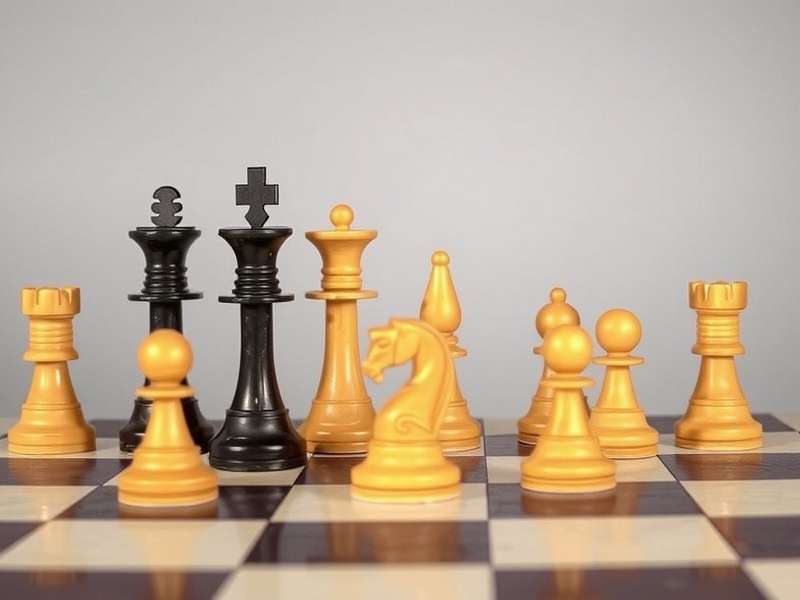
The Chessboard Army: An Overview
Chess, known as 'Shatranj' in ancient India, originated as 'Chaturanga' around the 6th century AD. The game simulated a battlefield with four divisions of the military: infantry, cavalry, elephants, and chariots, which evolved into the modern pawn, knight, bishop, and rook respectively. Each side begins with 16 pieces: one King, one Queen, two Rooks, two Bishops, two Knights, and eight Pawns.
The arrangement is symmetrical and critical. The back rank (first row for White, eighth for Black) is set as follows from left to right (from White's perspective): Rook, Knight, Bishop, Queen, King, Bishop, Knight, Rook. A common mnemonic is "Queen on her own color" – the White Queen starts on a white square, the Black Queen on a black square.
For players looking to set up correctly every time, understanding the chess board setup in various cultural contexts can be immensely helpful, especially for beginners.
Pieces per player at the start
Unique types of pieces
Squares on the battlefield
Years of evolutionary history
The King: Your Most Important Piece
The King is the heart of the game. If it is checkmated (under attack with no escape), the game ends immediately. Despite its supreme importance, the King is relatively slow and vulnerable, moving only one square in any direction.
King: Key Attributes
Movement: One square in any direction (horizontal, vertical, diagonal).
Special Move: Castling (with either Rook). This is the only time the King moves two squares, and the Rook jumps over it. Conditions: Neither piece has moved, squares between are empty, King is not in check, and does not pass through check.
Value: Priceless (cannot be captured).
Strategic Role: Early game: Keep safe, usually by castling. Endgame: Become an active fighting piece. The King's power increases as the board empties.
Indian Grandmaster Viswanathan Anand famously demonstrated king activity in endgames, often walking his King deep into enemy territory to support passed pawns. Remember, a centralized King in the endgame is a powerful asset.
The Queen: The Most Powerful Attacker
The Queen combines the movement of the Rook and Bishop, making it the most versatile and powerful piece on the board (worth 9 points). It can move any number of squares along a rank, file, or diagonal.
Queen: Key Attributes
Movement: Any number of squares horizontally, vertically, or diagonally.
Value: 9 points (equivalent to two Rooks or three minor pieces).
Strategic Role: Primary attacker, excels in open positions. Use it to create multiple threats simultaneously (forks, pins, skewers). However, avoid developing it too early as it can be chased by lesser pieces, losing tempo.
Weakness: Can be vulnerable to attacks from less valuable pieces. Don't let it get trapped!
In many free online chess games, beginners tend to bring the Queen out too early, leading to the "Scholar's Mate" attempt. While a quick checkmate is tempting, solid development is wiser for long-term improvement.
The Rooks: The Fortresses
The Rook (worth 5 points) moves any number of squares horizontally or vertically. It is a long-range piece that becomes particularly powerful in the endgame when files are open.
Rook: Key Attributes
Movement: Any number of squares horizontally or vertically.
Special Move: Castling (with the King).
Value: 5 points.
Strategic Role: Control open files. Place them on the seventh or eighth rank (opponent's back rank) for maximum pressure. Rooks work best in pairs, connected on the same rank or file. The famous "rook lift" involves moving a rook in front of its own pawns to attack on a different file.
A common saying is "Rooks belong behind passed pawns" – whether your own (to support its advance) or your opponent's (to block it from behind). For a classic experience with great rook play, many enjoy Chess Titans download for PC, which offers clean visuals and solid AI.
The Bishops: Diagonal Sniper
Each Bishop (worth 3 points) moves any number of squares diagonally. A player starts with one Bishop on light squares and one on dark squares; they never change square color. This leads to the concept of the "bishop pair" – a significant advantage in open positions.
Bishop: Key Attributes
Movement: Any number of squares diagonally.
Value: 3 points (but the bishop pair is often valued at 7 points total).
Strategic Role: Excellent in open positions with long diagonals. Weak in closed, pawn-heavy positions where its movement is blocked. A "good bishop" has its pawns on opposite-colored squares; a "bad bishop" is blocked by its own pawns on the same color.
In Indian tournaments, players often strive to maintain the bishop pair, sacrificing a pawn if necessary to avoid trading them. The bishop's long-range capability makes it deadly in attacks against a castled king, especially on the a2-g8 or h1-a8 diagonals.
The Knights: The Tricky Jumpers
The Knight (worth 3 points) is the only piece that can jump over other pieces. It moves in an "L" shape: two squares in one direction and then one square perpendicular, or one square and then two squares.
Knight: Key Attributes
Movement: "L" shape: (2,1) or (1,2). It jumps over any intervening pieces.
Value: 3 points (but often considered slightly better than a bishop in closed positions).
Strategic Role: Excellent in closed positions with many pawns. Its ability to fork (attack two pieces at once) is legendary. Knights are strongest near the center where they control up to 8 squares. They are weak on the edges of the board.
The knight's fork is a deadly tactical weapon. A classic example is the "royal fork" attacking both king and queen. For practicing knight forks and other tactics, consider a 2 player chess game Android app that allows you to play with a friend offline and hone your skills.
The Pawns: The Soul of Chess
Pawns (worth 1 point each) are the foot soldiers. They move forward one square (two squares on their first move) and capture diagonally. They may seem weak, but their strategic importance is immense. French master Philidor called pawns "the soul of chess."
Pawn: Key Attributes
Movement: Forward one square (never backward). First move option: two squares forward.
Capture: Diagonally forward one square.
Special Moves: En passant (capturing a pawn that has just moved two squares), and Promotion (upon reaching the eighth rank, a pawn becomes any piece except a king, usually a queen).
Strategic Role: Create pawn structure, control key squares, form shields for the king, and become potential queens. Pawn majorities, passed pawns, and pawn chains are critical strategic concepts.
Pawn structure often dictates the game's character. Isolated, doubled, or backward pawns are weaknesses, while connected passed pawns are a powerful force. Understanding pawn play is essential for transitioning from beginner to intermediate. If you're looking for a classic experience to practice, chess 2 player same computer setups allow for deep analysis of pawn structures with a friend.
Advanced Piece Coordination & Strategy
Mastering individual pieces is just the beginning. True chess strength lies in coordinating your pieces harmoniously, creating threats that a single piece cannot.
Piece Activity & Outposts
An active piece controls more squares and has greater influence. Knights love secure outposts—squares (often central) that cannot be attacked by enemy pawns. Bishops crave open diagonals. Rooks need open files.
Trade Decisions: When to Exchange
General principles: Trade when you are ahead in material (simplify to an easily winning endgame). Trade off your opponent's active pieces. Avoid trading your active pieces for his inactive ones. The bishop vs knight trade depends heavily on the pawn structure.
Sacrifices: Giving to Get
Sometimes sacrificing a piece (like a knight or bishop) for a devastating attack on the king is correct. These are speculative sacrifices and require precise calculation. The classic "Greek Gift" sacrifice (bishop takes h7 pawn with knight support) is a prime example.
Endgame Piece Roles
In endgames, kings become active. Rooks belong behind passed pawns. Bishops of opposite colors often lead to draws even with a material advantage. A knight and bishop can force checkmate against a lone king (though it's tricky).
To test your piece coordination in a convenient format, try some chess online game free platforms that offer daily puzzles and computer analysis of your games.
Further Resources & Links
Enhance your chess journey with these carefully selected resources from our site:
- Free Online Chess Games – Practice against players worldwide.
- Chess Titans Download for PC – Get the classic Windows chess experience.
- 2 Player Chess Game Android – Play with a friend on your phone.
- Chess 2 Player Same Computer – Pass-and-play on one device.
- Chess Board Setup Sinhala – Guidance for our Sri Lankan friends.
- Play Chess 2 Player – General guide to two-player chess.
- Chess Titans Windows 7 – Installation help for older OS.
- Chess Online Game Free – Where to play chess online for free.
- Chess 2 Player App Offline – No internet? No problem.
Remember, consistent practice and study are key. Analyze your games, learn from losses, and celebrate your victories!
Community Feedback
Share your thoughts, rate this guide, and help us improve!
Leave a Comment
Share your tips, ask questions, or discuss piece strategies with other players.