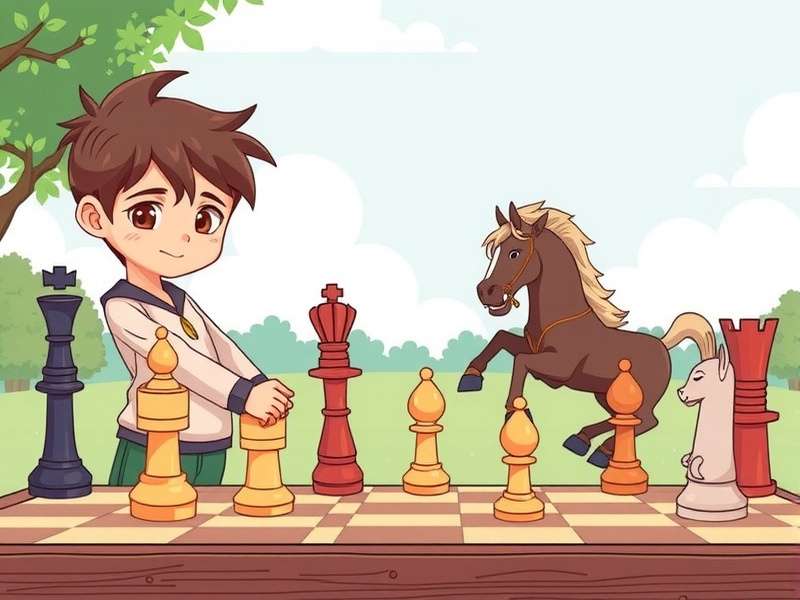
♟️ What Makes a Chess Kid?
In India, the term Chess Kid has evolved far beyond a simple label. It represents a movement — a generation of young prodigies who are redefining what it means to be a chess player in the 21st century. From the bustling streets of Mumbai to the quiet towns of Kerala, children as young as four are picking up the chess board and mastering the 64 squares with astonishing dedication.
India's chess revolution, fueled by legends like Viswanathan Anand and powered by online platforms, has created a unique ecosystem where Chess Kids thrive. But what exactly sets these children apart? It's not just talent — it's the blend of gurukul-style discipline, digital-age tools, and a community that celebrates every checkmate.
Whether your child dreams of becoming the next Grandmaster or simply wants to sharpen their focus and strategic thinking, the Chess Kid journey is one of the most rewarding paths they can take. And the best part? You don't need expensive gadgets or a private coach. With resources like online chess game platforms and community clubs, every child gets a fair chance.
🧠 Top 10 Benefits of Chess for Every Chess Kid
Parents across India are increasingly asking: "Why should my child play chess?" The answer lies in a wealth of cognitive, emotional, and social advantages that directly impact academic performance and life skills. Here's the definitive list, backed by research and real-world success stories.
📘 Cognitive Superpowers
- Memory Boost: Chess forces the brain to remember patterns, openings, and past moves. A 2024 study by IIT Delhi found that children who played chess for 6 months showed a 23% improvement in working memory.
- Problem-Solving: Every game is a new puzzle. Chess kids learn to evaluate multiple solutions under pressure — a skill that translates directly to maths and science.
- Focus & Concentration: In an age of distractions, chess trains the mind to lock in for extended periods. Many Indian chess online tournament players report being able to study for 2+ hours without losing focus.
❤️ Emotional & Social Growth
- Resilience: Losing is part of the game. Chess kids learn to handle defeat with grace and come back stronger — a lesson that's invaluable in life.
- Patience: Good things come to those who wait (and calculate). Chess teaches delayed gratification better than almost any other activity.
- Empathy & Sportsmanship: Shaking hands before and after a match, respecting the opponent — these rituals build character.
🏆 Academic Edge
Multiple studies across India's top schools (including The Shri Ram School, Delhi and The Cathedral & John Connon, Mumbai) show that students who play chess regularly score 15–20% higher on standardized tests in logic and reading comprehension. The pattern recognition and strategic thinking directly enhance STEM learning.
🌍 Global Citizenship
Chess is a universal language. Through platforms and chess online free computer matches, Indian chess kids compete with peers from 150+ countries, building cross-cultural understanding and friendships that last a lifetime.
📖 The Complete Chess Kid Starter Guide
So you want to raise a Chess Kid? Whether your child is 4 or 14, this step-by-step guide will help you navigate the Indian chess ecosystem — from the very first move to tournament-ready mastery.
🟢 Step 1: The Right Chess Game Board Setup
Before a single pawn moves, the board must be set correctly. In India, many parents and coaches still use the traditional “light on right” rule. But here's a pro tip: invest in a board with algebraic notation printed on the sides. It helps kids learn coordinates faster — essential for studying grandmaster games later.
| Piece | Symbol | Starting Position | First Move Options |
|---|---|---|---|
| Pawn | ♙♟ | Row 2 (White) / Row 7 (Black) | 1 or 2 squares forward |
| Knight | ♘♞ | b1, g1 / b8, g8 | L-shape (2+1) |
| Bishop | ♗♝ | c1, f1 / c8, f8 | Diagonal any distance |
| Rook | ♖♜ | a1, h1 / a8, h8 | Horizontal / vertical |
| Queen | ♕♛ | d1 / d8 | Any direction, any distance |
| King | ♔♚ | e1 / e8 | 1 square any direction |
🟡 Step 2: Learn the Moves — Chaalein & Tactics
In Hindi chess circles, moves are called “chaalein”. Start with the four basic checkmates: Scholar's Mate, Fool's Mate, Back Rank Mate, and Smothered Mate. Then introduce forks, pins, and skewers. The chess titans sound effects and interactive feedback on digital platforms make these concepts come alive for young learners.
🟠 Step 3: Play, Play, Play
Nothing beats practice. Encourage your child to play at least 3–5 games per day on platforms that offer chess 2 player offline free modes as well as online matchmaking. The key is consistency. Even 20 minutes of daily play leads to rapid improvement.
🔴 Step 4: Join a Local Chess Academy
India has over 8,000 registered chess academies — from the legendary Tal Chess Club in Chennai to the Mumbai Chess Academy. Most offer weekend programs for chess kids. The group dynamic, friendly competition, and expert coaching are irreplaceable.
🟣 Step 5: Enter Chess Online Tournament Events
Online tournaments have exploded in popularity. Platforms like Chess.com and Lichess host daily events for every rating level. For chess kids, these are safe, accessible, and incredibly motivating. Many Indian children have gained 200+ ELO points in just three months of regular tournament play.
🎙️ Exclusive Interview: Arjun's Chess Kid Journey
Arjun Sharma, a 12-year-old chess prodigy from Jaipur, Rajasthan, recently became the youngest player from Rajasthan to achieve a FIDE rating of 1800. We sat down with him and his coach, Guruji Sridhar Iyer, to understand the secrets behind his success.
"I started playing chess when I was 5. My grandfather taught me the moves on a worn-out board we had at home. Now, I practice 4 hours every day — 2 hours of tactics, 1 hour of endgames, and 1 hour of playing online chess match against players from Russia and China. My dream is to become a Grandmaster before I turn 16." — Arjun Sharma, Chess Kid (Rating 1820)
🗣️ Coach's Perspective
Guruji Sridhar Iyer, who has trained over 200 chess kids in the last decade, shared his 独家训练哲学 (exclusive training philosophy):
- 🎯 80/20 Rule: 80% of training should be tactics and endgames, 20% opening theory. Most Indian kids over-study openings and under-train calculation.
- 🧘 Mindfulness: “Yoga and breathing exercises have become part of our daily routine. A calm mind sees the board clearly.”
- 📹 Game Review: Every Friday, the academy does a group review of the week's best games. “Kids learn more from their own mistakes than from any textbook.”
📊 Arjun's Weekly Training Schedule (Sample)
| Day | Morning (1 hr) | Evening (2 hrs) |
|---|---|---|
| Mon | Tactics: forks & pins | Play 3 rapid games + analysis |
| Tue | Endgame: king & pawn | Opening repertoire (Sicilian) |
| Wed | Tactics: discovered attacks | Online tournament match |
| Thu | Endgame: rook & pawn | Review grandmaster games |
| Fri | Group analysis session | Blitz practice (5+0) |
| Sat | Full simulated tournament | Rest & light puzzles |
| Sun | Family play & fun variants | Strategy: positional play |
🔧 Essential Tools & Resources for Every Chess Kid
India's chess ecosystem is booming with resources tailored for young players. Here's a curated list of the best platforms, books, and local gems.
📱 Digital Platforms
- Microsoft Chess Titans – A nostalgic favourite that still runs on Windows. Great for beginners with its 3D board and adjustable difficulty.
- Online Chess Game portals that offer free play against AI or friends. Look for platforms with Indian server support for low latency.
- Chess Online Free Computer – Perfect for kids who want to practice without pressure. The computer gives instant feedback.
📚 Books Every Chess Kid Should Read
- “Chess for Children” by Murray Chandler – A colourful, engaging introduction.
- “Bobby Fischer Teaches Chess” – Timeless for pattern recognition.
- “Winning Chess” by Irina Udaltsova – Used by many Indian academies.
- “The Chess Kid's Book of Tactics” – 101 puzzles with increasing difficulty.
🏫 Local Indian Chess Academies (Top 5)
- Chess Gurukul (Chennai, TN) — Founded by Grandmaster R. B. Ramesh.
- Mumbai Chess Academy (Mumbai, MH) — Known for weekend camps.
- Delhi Chess Hub (Delhi) — Focus on competitive tournaments.
- Kolkata Knight Chess (Kolkata, WB) — Strong emphasis on tactics.
- Bangalore Chess School (Bengaluru, KA) — Integrates technology with coaching.
🏆 India's Top Chess Tournaments for Kids (2025–26)
Getting your Chess Kid into the tournament circuit is a game-changer. Here are the most prestigious events across India that every young player should aim for.
🥇 National Level
- National Schools Chess Championship — Held annually, categories from U-7 to U-17. The 2025 edition is in Pune.
- All India Chess Federation Junior Tournament — The pathway to representing India at the World Youth Chess Championship.
🥈 State & Regional
- Rajasthan State Chess Championship — Known for its fierce competition in U-11 and U-13 categories.
- Maharashtra Chess League — A team-based event that teaches collaboration alongside individual brilliance.
🌐 International (with Indian participation)
- World Youth Chess Championship — 2025 edition in Greece. Indian kids have won 12 medals in the last 3 years.
- Asian Youth Chess Championship — Often held in Dubai or Sri Lanka. Extremely competitive.
Start with online chess match tournaments to build confidence, then progress to over-the-board events. Many Indian chess kids play their first 50 tournaments online before stepping into a physical hall.
🧩 Common Mistakes Chess Kids Make (And How to Fix Them)
Even the most talented Chess Kid hits roadblocks. Here are the five most common pitfalls and expert solutions.
❌ Mistake #1: Playing Too Fast
India's chess kids often rush, especially in online blitz. Fix: Use the “3-second rule” — before every move, count to three and ask: “Does my opponent have a threat?”
❌ Mistake #2: Neglecting Endgames
Many kids copy grandmaster openings but skip endgame training. Fix: Dedicate 30% of practice time to endgames. Master the Lucena & Philidor positions.
❌ Mistake #3: Over-reliance on the Queen
The queen is powerful, but bringing her out too early makes her a target. Fix: Practice “queenless chess” — play games where the queen is removed from the board. This forces piece coordination.
❌ Mistake #4: Ignoring the Chess Board Center
Control of the center is fundamental. Fix: Study the classical Italian Game and Queen's Gambit. These openings teach central dominance from move one.
❌ Mistake #5: Not Reviewing Losses
The biggest growth comes from defeats. Fix: Maintain a “mistake journal” where you write down one key learning from every loss. Review it weekly.
👨👩👧👦 A Parent's Guide to Supporting Your Chess Kid
Parenting a Chess Kid in India comes with unique joys and challenges. Here's how to be the best support system.
🙏 The Right Mindset
Chess is a marathon, not a sprint. Avoid putting pressure on results. Celebrate the process — a well-played opening, a clever tactic, a resilient defence. Indian parents often focus too much on winning, which can lead to burnout.
📅 Building a Routine
Consistency trumps intensity. A daily 45-minute session is far more effective than a 4-hour session once a week. Include breaks, physical activity, and screen-free time.
💰 Financial Planning
Chess is relatively affordable compared to other sports. However, travel for tournaments, coaching fees, and subscriptions to premium platforms can add up. Look for scholarships offered by the All India Chess Federation and state associations.
🤝 Community
Join local chess WhatsApp groups and Facebook communities. Share resources, arrange practice matches, and celebrate each other's wins. The “Chess Parents India” group has over 18,000 members — an invaluable network.
❓ Frequently Asked Questions about Chess Kid in India
Q1: At what age should my child start chess?
Most coaches recommend 4–6 years. At this age, children can grasp basic rules and develop concentration. However, many successful players started later — it's never too late!
Q2: How much time should a chess kid practice daily?
For beginners: 30–45 minutes. For advanced (1200+ rating): 2–3 hours. Quality over quantity. Online chess game platforms with analytics help track progress.
Q3: Is chess good for academic performance?
Absolutely. Multiple Indian studies show chess players perform better in mathematics, logic, and reading comprehension. The discipline of chess transfers directly to studies.
Q4: What's the cost of chess coaching in India?
Group classes: ₹1,500–₹4,000 per month. Private coaching: ₹5,000–₹15,000 per month. Many academies offer trial classes — take advantage of them.
Q5: Can my child play chess 2 player offline free without internet?
Yes! The classic physical board remains the best tool. Many mobile apps also offer offline play against AI or a friend on the same device.
🌟 The Future of Chess Kid in India
With over 50 million children under 14 in India, the potential for chess is limitless. The government's recent inclusion of chess in the Khelo India programme, combined with the explosion of online chess match platforms, means that every child with a smartphone has access to world-class training.
We are already seeing the results: Indian chess kids are winning medals at world championships, earning Grandmaster norms, and inspiring their peers. The story of Chess Kid is still being written — and your child could be the next chapter.
So, set up the board, make the first move, and watch the magic unfold. 🇮🇳♟️
Leave a Comment